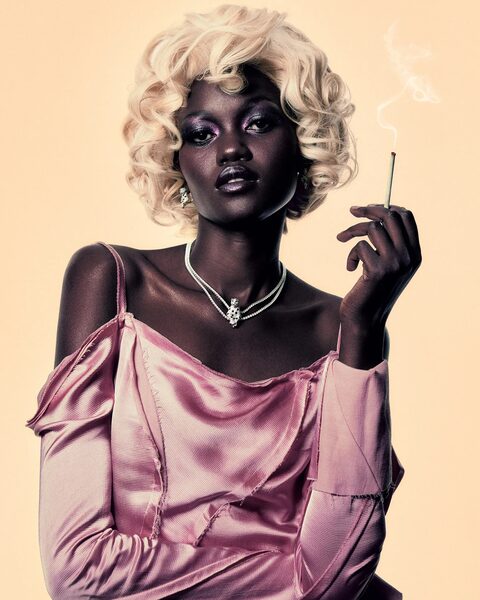
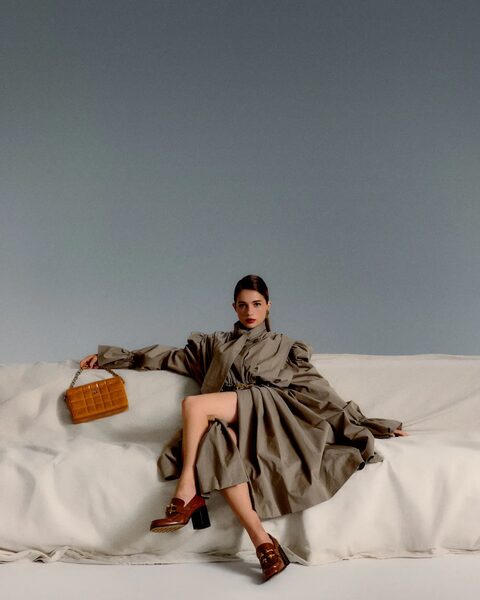
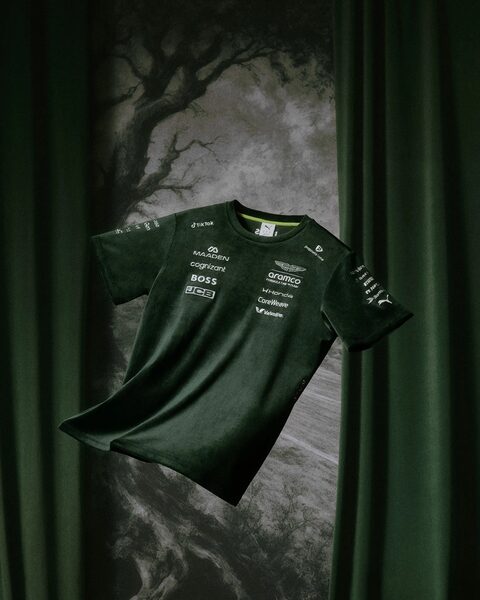
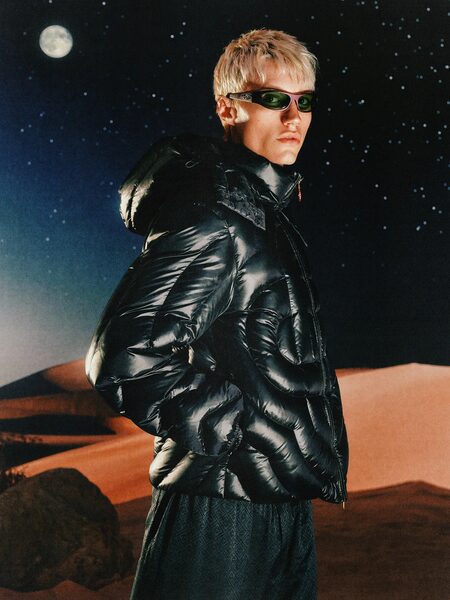
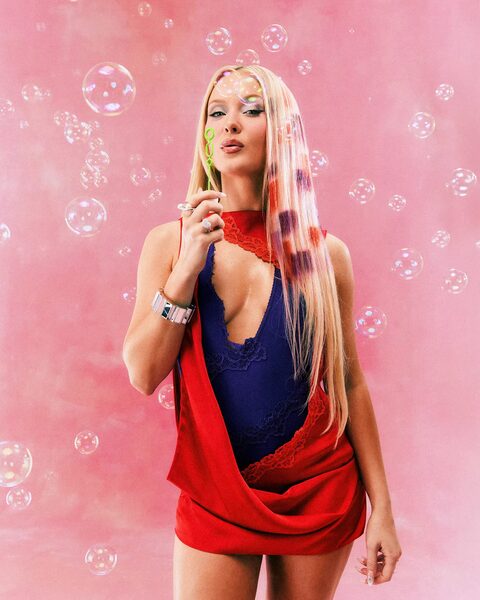
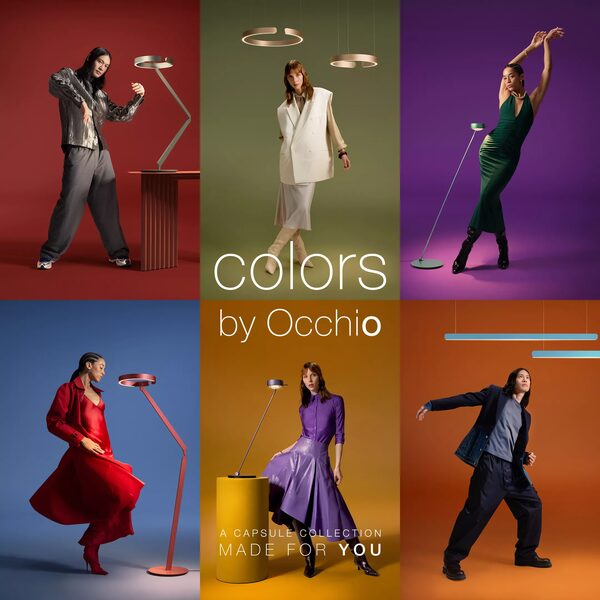
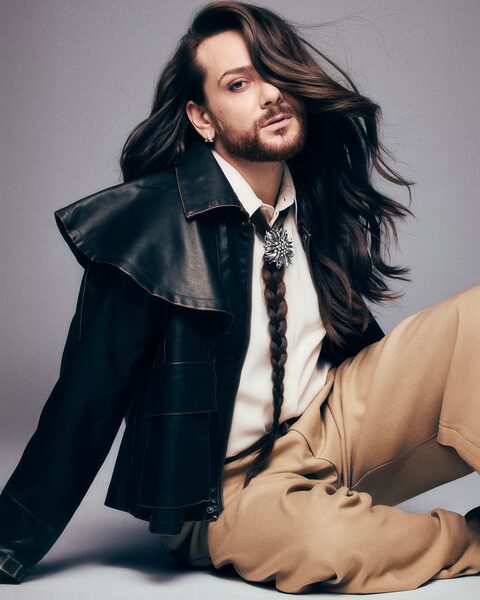
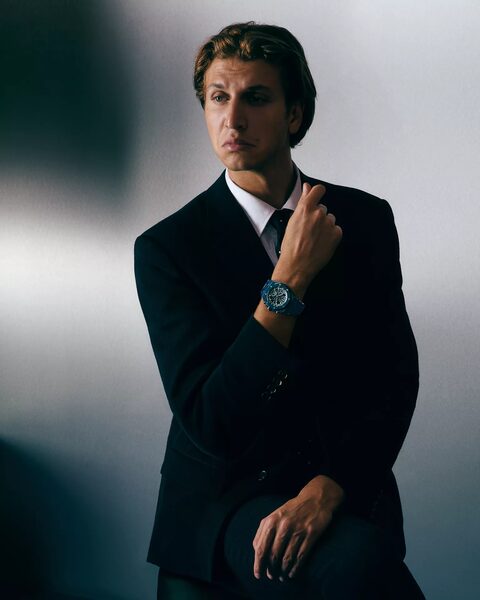
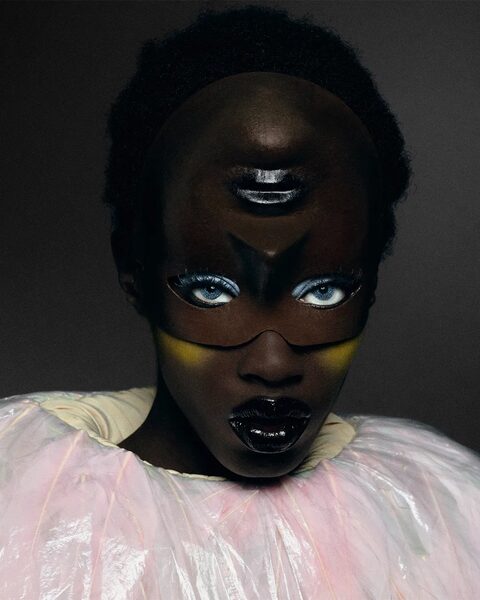
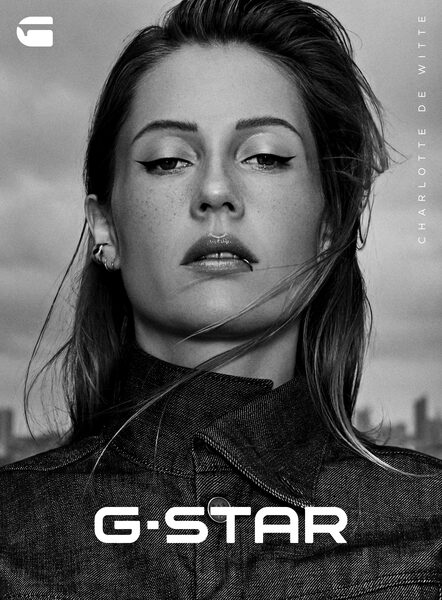
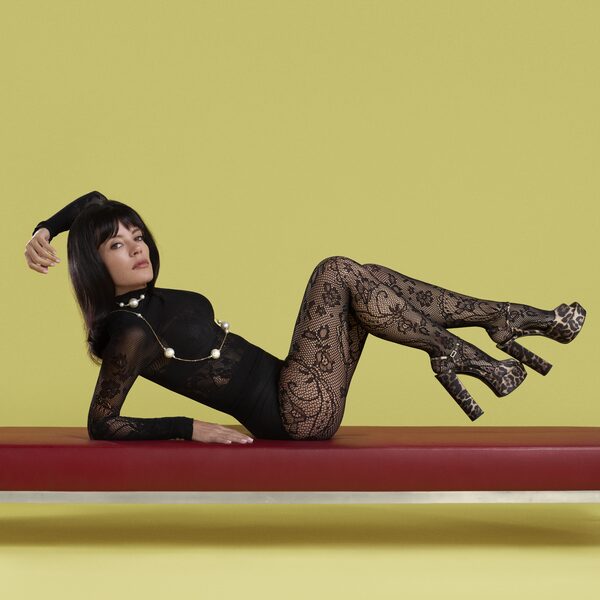
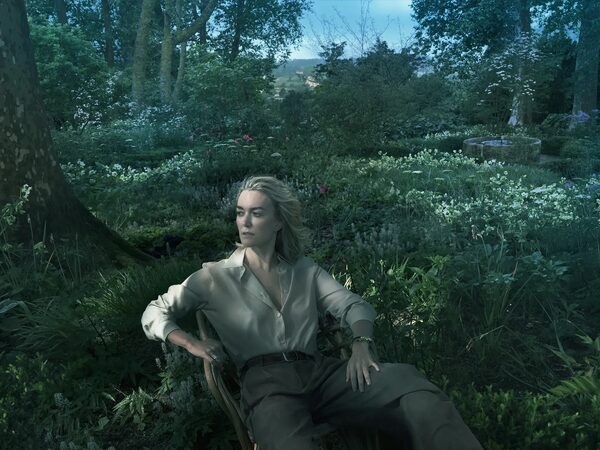
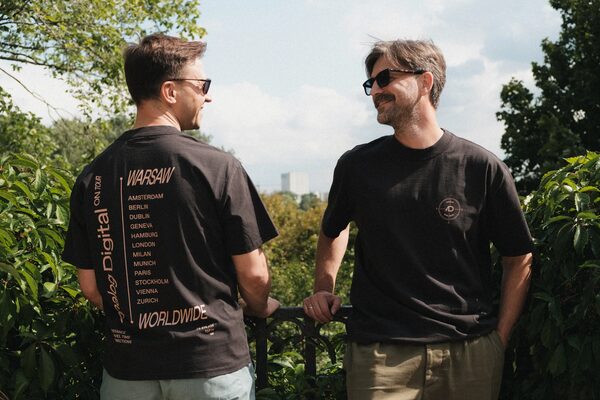
Bold. Surreal. Expressive. – German-Swedish photographer Per Appelgren effortlessly walks the fine line between high-end commercial photography and progressive editorial work. From his studio, he directs international productions that are above all else: modern, emotional, and visually attuned to the fleeting spirit of our times. His signature style captivates with its rich color palette, clever camera angles, and visual storytelling that celebrates individuality and diversity.
gosee.news presents: 'Studio Visit: Per Appelgren'
Per, Casablanca’s new Pre-Fall 2026 campaign exists somewhere between cinema, dream sequence and fashion photography. Where does the development of a visual world like this begin for you?
It usually starts with a feeling. Colors, scenes, a film still, or even music. I collect these kinds of references from films, photography books, architecture and different cultures, then develop them together with the art director into a coherent visual language. With Casablanca, our goal was above all to create a world of its own—familiar enough to immediately draw you in, yet surreal enough to stay with you long after you've seen it.
The campaign was produced on a virtual production stage. What creative possibilities does this technology open up for you—and where are its limitations?
Virtual production allows us to bring entire worlds into the studio and transform them within moments. Backgrounds can be exchanged, perspectives and scale adjusted, while real elements seamlessly merge with digital environments. Especially when collaborating with specialized digital and AI artists, it becomes possible to create worlds that would otherwise require enormous physical productions.
At the same time, the technology is never the point in itself. If the lighting, perspective, set, camera and talent don't work together, the result quickly falls apart. And having too many possibilities can just as easily dilute an idea. In the end, a clear creative vision remains the most important ingredient.
How closely do you work with Creative Director Charaf Tajer? How did you first meet, and how early before a shoot does the creative exchange begin?
The collaboration is very close and involves Casablanca's entire creative team—from the Creative Director and Brand Art Director to the external Art Director. Together we develop the direction, atmosphere and visual universe of each campaign.
Charaf and I originally connected through Instagram. After our first conversations, we photographed a series of portraits of him in London, and that relationship has since grown into two campaigns together. Of course, many fundamentals are established beforehand, but our most intensive creative exchange actually happens on set, where we react directly to the circumstances and to the images as they evolve.
Is there a common thread running through all of your work?
I'm interested in visual worlds where something feels ever so slightly shifted. Not completely real, but not so surreal that the emotional connection disappears. Intense colors are another recurring element, as are people with a strong sense of presence.
I want to elevate the people in front of my camera and give them a stage where individuality and diversity simply exist as something natural.
What currently inspires you outside photography - art, architecture, music, literature - or is everything driven by AI these days?
Films are probably my biggest source of inspiration, especially productions from the 1990s and early 2000s, where atmosphere was created through light, color, production design and practical solutions rather than visual effects. I'm fascinated by how entire worlds and moods were built with relatively simple means.
Photography books, architecture, music and sometimes just a fleeting everyday moment are equally important. Often it's not an entire work that inspires me, but a small detail that triggers something. I write these thoughts down so I can return to them later and continue developing them.
Are there artists or photographers you keep returning to?
I always come back to the great masters - Steven Meisel, Helmut Newton, Nick Knight and Richard Avedon - for very different reasons. With Meisel, it's his incredible versatility and world-building. Newton inspires me through his uncompromising clarity, while Knight's relentless drive to experiment continues to impress me.
Their work is deeply rooted in its respective era while remaining remarkably relevant today. At the same time, I'm inspired by contemporary artists such as Zhong Lin, Szilvester Makó and Rafael Pavarotti, who continue to push photography in entirely new directions. It's never about copying someone's visual language, but about understanding why an image still resonates decades later and how I can translate those qualities into my own work.
What makes a strong visual story?
A strong visual story doesn't necessarily require a linear narrative, but it does need a clear point of view and an internal logic. Casting, styling, lighting, color, movement and environment all have to tell the same story without every detail needing to be explained.
What interests me most is when an image works immediately while still leaving questions unanswered. A compelling visual story invites the viewer in without giving everything away, which is exactly what allows it to stay with you.
What role do mistakes, chance and improvisation play in your creative process?
Good preparation is essential. It creates the confidence to move away from the original plan once you're on set.
The most memorable moments usually happen completely unexpectedly—through an unplanned movement, a particular expression, a reflection of light or a spontaneous idea from someone on the team. The important thing is recognizing those moments and giving them space. That's where much of the magic of a shoot lies for me: something emerges that couldn't have been sketched out beforehand or fully explained—and certainly couldn't simply be recreated on a computer.
Which book is currently on your bedside table?
Right now there are two: Panikherz by Benjamin von Stuckrad-Barre and Paul Arden's It's Not How Good You Are, It's How Good You Want to Be.
Where do your best ideas come from?
Usually when I'm not actively trying to force one. While driving, on a train or out in nature—anywhere I'm free from constant external input for a while. As soon as my mind no longer has to keep reacting, ideas begin to flow naturally.
If someone could only see one project by Per Appelgren, which one would you choose—and why?
As of today, it would probably be the Casablanca Pre-Fall 2026 campaign. Not because it represents every aspect of my work, but because it brings together many of the things that define what interests me photographically: bold characters, fashion, saturated color, a cinematic atmosphere, a subtly surreal world and a highly technical production that still feels authentic.
At the same time, the campaign represents the kind of collaboration I enjoy most. It's what happens when many outstanding creative minds and perspectives come together to create one clear, shared vision.
Which three words best describe the work of Per Appelgren?
Bold. Surreal. Expressive.