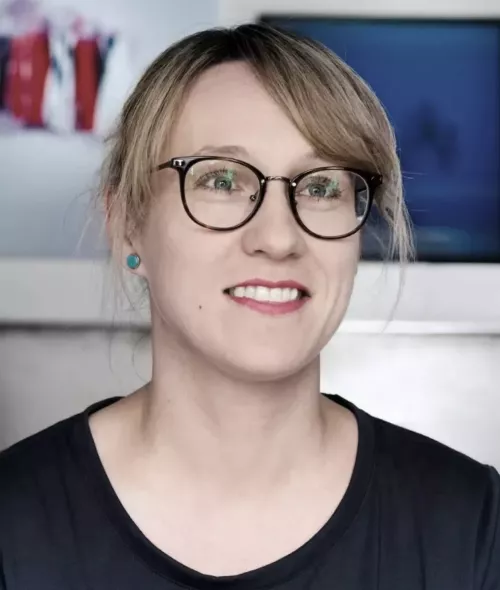
Justine Boltzek is among the most versatile creative directors in the German agency landscape. Since January 2024, she has been working as Creative Director at the digital agency BANAUTEN, where she develops brand-defining campaigns at the intersection of design, storytelling, and technology.
Previously, she spent several years as an Art Director at Jung von Matt in Hamburg, was responsible for retouching and content management at THE SCOPE, and gained marketing experience at Fritz Kola. In her current role, she combines strategic thinking with a distinctive visual signature - spanning campaigns, branding, and social-first formats.
"For me, creativity means rethinking things over and over again and pushing boundaries." In times when AI tools such as Midjourney, Firefly, or Runway are becoming increasingly prevalent, she doesn’t see them as replacements but as instruments that open up new creative freedom.
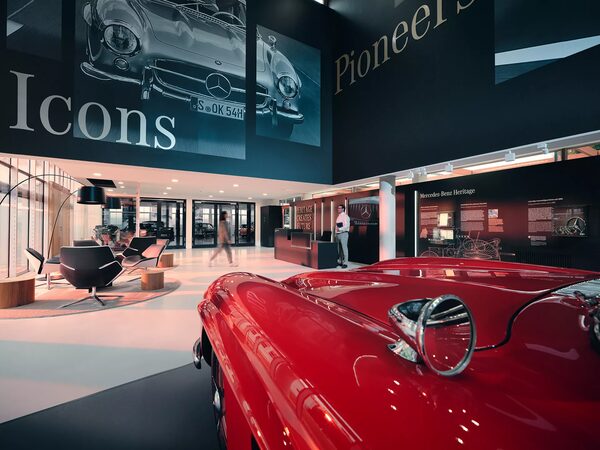
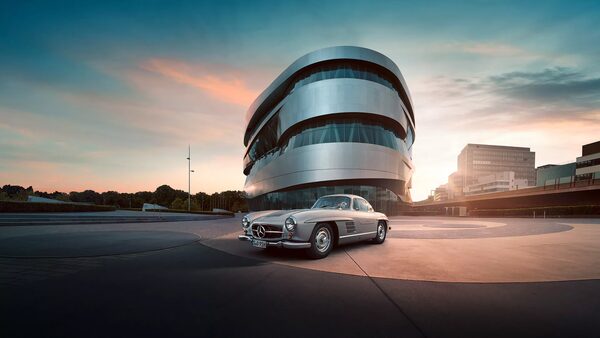
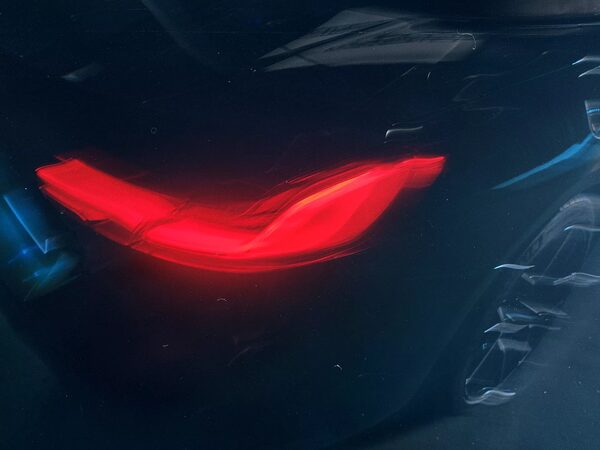
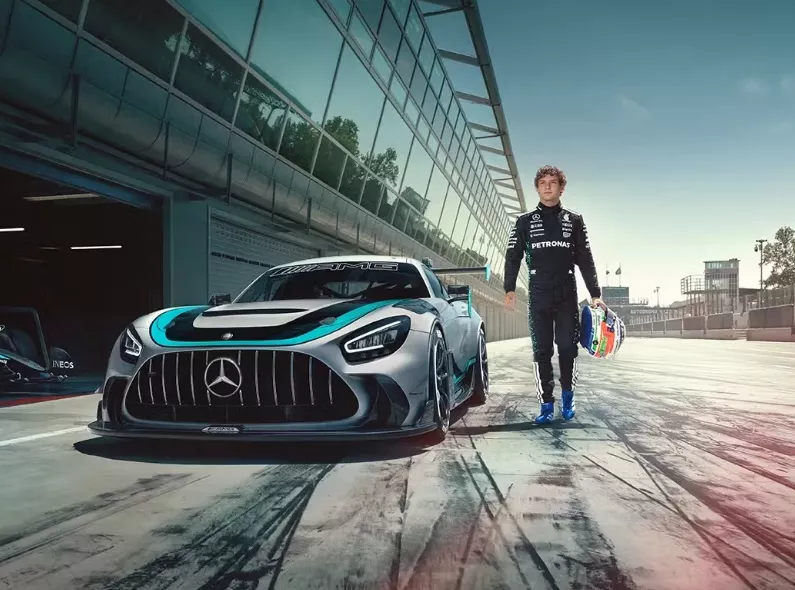
For the Mercedes-Benz Museum, she developed the campaign "Iconic Centering" for UEFA Euro 2024 - stillness meets motion: the museum remains an unmoving icon while everything else blurs past it in motion. The campaign was photographed by transportation specialist ANKE LUCKMANN. The campaign was extended for the Mercedes-Benz Classic Center. For Mercedes-AMG, she conceived the campaign for the GT2 Edition W16, featuring young race driver Kimi Antonelli. The idea: What happens when a race doesn’t take place on the track, but in the mind? Through dynamic storytelling, imagination and speed merge to deliver the message "Awakens the Driver in You".
In conversation with GoSee, Justine Boltzek discusses how she leads creative teams remotely, why she reads Kant - and why good ideas require courage.
You consistently work remotely - how does that change creative collaboration? And where do you see the biggest opportunities (and limitations)? JB: I see remote work as one of many ways to bring together the best team - regardless of people’s life situations or where they live. Especially in professions where remote work is possible, it should be viewed as a natural option, not a downgrade from the traditional setup. In the advertising industry, many agencies tout New Work, but the trend currently seems to be reversing: back to the office, full-time, open-end. Flexibility is becoming the exception again. Sure, control and old models can feel safer in uncertain times - but in the end, that only limits you. I’m not simply pro-remote work. I’m pro-the best solution, and that can look very different depending on the context.
What vision do you bring to your role as Creative Director? JB: As a Creative Director, I try to create space for ideas. Over time, invisible boundaries tend to creep into teams and client relationships, and people start replicating what already works. Challenging the status quo is both a skill and a mindset - and it can be learned. I want my team to dare to think big, to push ideas, and to try things that don’t play it safe. And that also means an idea doesn’t care who had it. Everyone should be able to contribute.
What inspired you to pursue a creative career - and what keeps you in it? JB: I’ve always been fascinated by art, design, culture, and creative people. But I didn’t just want to do something theoretical - I wanted something hands-on, so I studied graphic and communication design. I’ve worked in different agencies and also on the client side. Of course, agency work can be demanding, but it’s the culture, the creative people, and the variety of topics that keep me here. In the end, it’s the fun that drives me.
You say ideas don’t just fall from the sky - how does that "magic moment" happen for you? JB: Good ideas require curiosity. You can combine things that didn’t seem to fit before or spot trends just as they’re emerging. Especially in social media, you need to stay open and react quickly. It’s not a hustle thing you do on the side - it’s a constant mindset. And bringing those ideas to life is craftsmanship - something you can actually learn.
Alongside your work, you study cultural studies and philosophy - and you admire Kant. How do his ideas influence your work as a Creative Director? JB: As creatives in communication, we have responsibility. We shape opinions, perceptions, pop culture. Good communication should always be defensible, not just viral. Do I really want women to be perceived that way? Should teenagers think this is the next trend? Am I indirectly supporting a political narrative? Just because something can be done doesn’t mean it should be. That’s Kant’s ethics - brutally relevant, and still so current.
What has been your most personally significant project so far? JB: Definitely the Mercedes-Benz GLA campaign, produced in 2013 and launched in 2014. At the time, I was Art Director at Jung von Matt, responsible for both VKL and CRM. We shot in Los Angeles, Las Vegas, and Joshua Tree National Park - it was an incredible experience. For me, it was special because, as a rookie in the industry, I learned so much: concept development, organization, teamwork on set, even location scouting. It was a huge learning curve - and a lot of fun. A project that truly shaped me.
Tell us about the Mercedes-Benz Museum project "Iconic Centering". How did you come up with the idea of combining movement and stillness? JB: Iconic Centering came from the client’s wish to give the Mercedes-Benz Museum a strong presence during UEFA Euro 2024 while creating a campaign with long-term impact. The museum had a unique stage at that time, with an international audience, and we wanted to highlight its cultural and architectural significance. From the start, I knew the architecture had to be central to every frame, but I also wanted to capture the dynamics around it - visitors, light, atmosphere - and the brand’s evolution.
That’s how the contrast between calm and movement emerged: the museum stands strong and timeless while everything else rushes by in motion blur. The campaign’s look is intentionally unconventional for the automotive world - soft tones, a protagonist guiding viewers through the space, and an almost cinematic narrative perspective. Somehow modern and timeless at once.
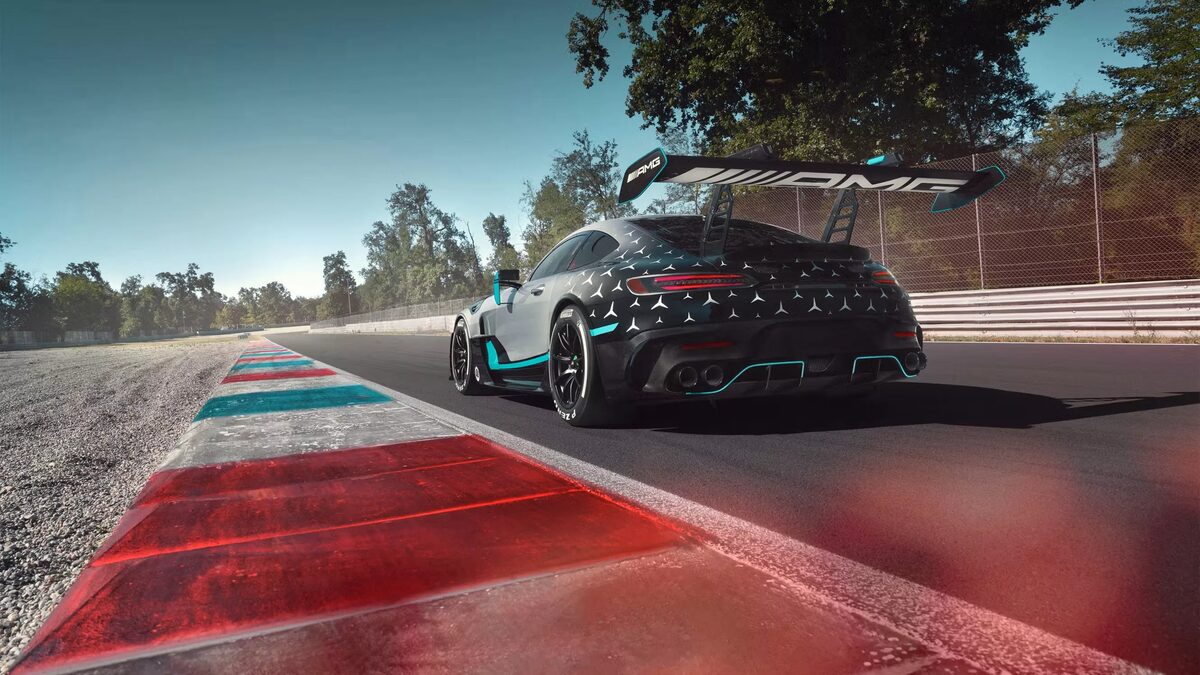
And tell us about the idea and execution of the Mercedes-AMG GT2 Edition W16 campaign. JB: The GT2 is highly limited - a race car, not street legal. With it and your imagination, you can get closer to the feeling of racing than ever. That was my starting point. The challenge was to visualize that exclusive driving experience. Together with race driver Kimi Antonelli, we blurred the boundaries between reality and imagination. The core idea: Awakens the driver in you.
The car becomes the catalyst for an experience where perception and speed merge. As the pace increases, the asphalt dissolves, and the surroundings transform into an intense racing scenario. We shot in Monza - cinematic visuals, bold contrasts, vibrant colors, futuristic reflections. Speed effects and CGI blend seamlessly with live action. Two days of production, an intense setup, and an incredible team - my highlight of the year so far.
More projects and campaigns can be found at justineboltzek.de