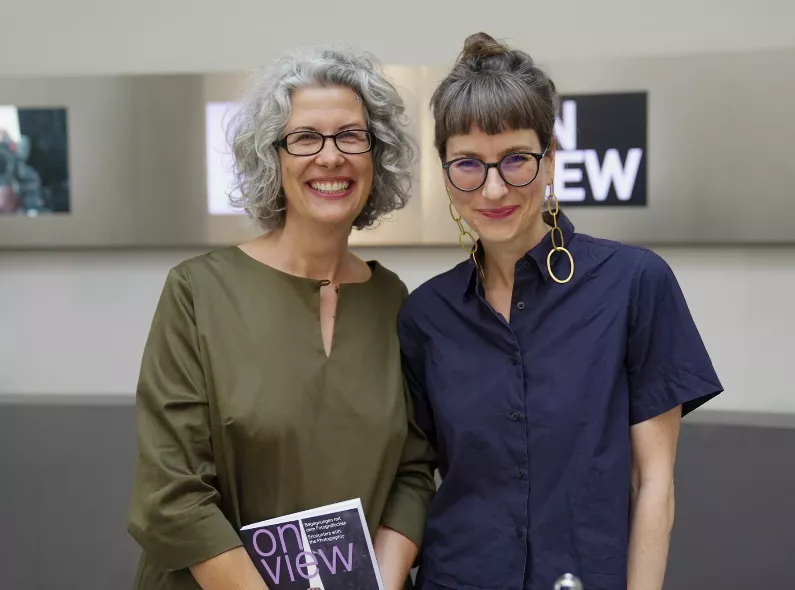
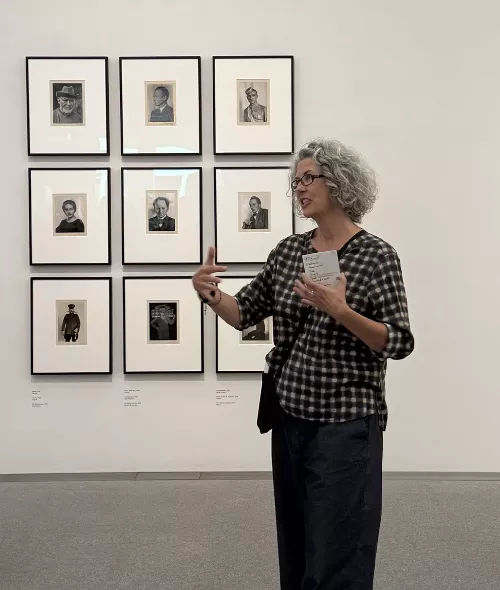
Since 2010, Simone Förster has curated the photographic treasures of modernity as Chief Curator at the Ann and Jürgen Wilde Foundation within the Bavarian State Painting Collections, with a particular talent for avant-garde, New Objectivity, and iconic works of photographic history. Her work is driven by the desire to present photography as an independent art form, both historically rooted and relevant in contemporary contexts.
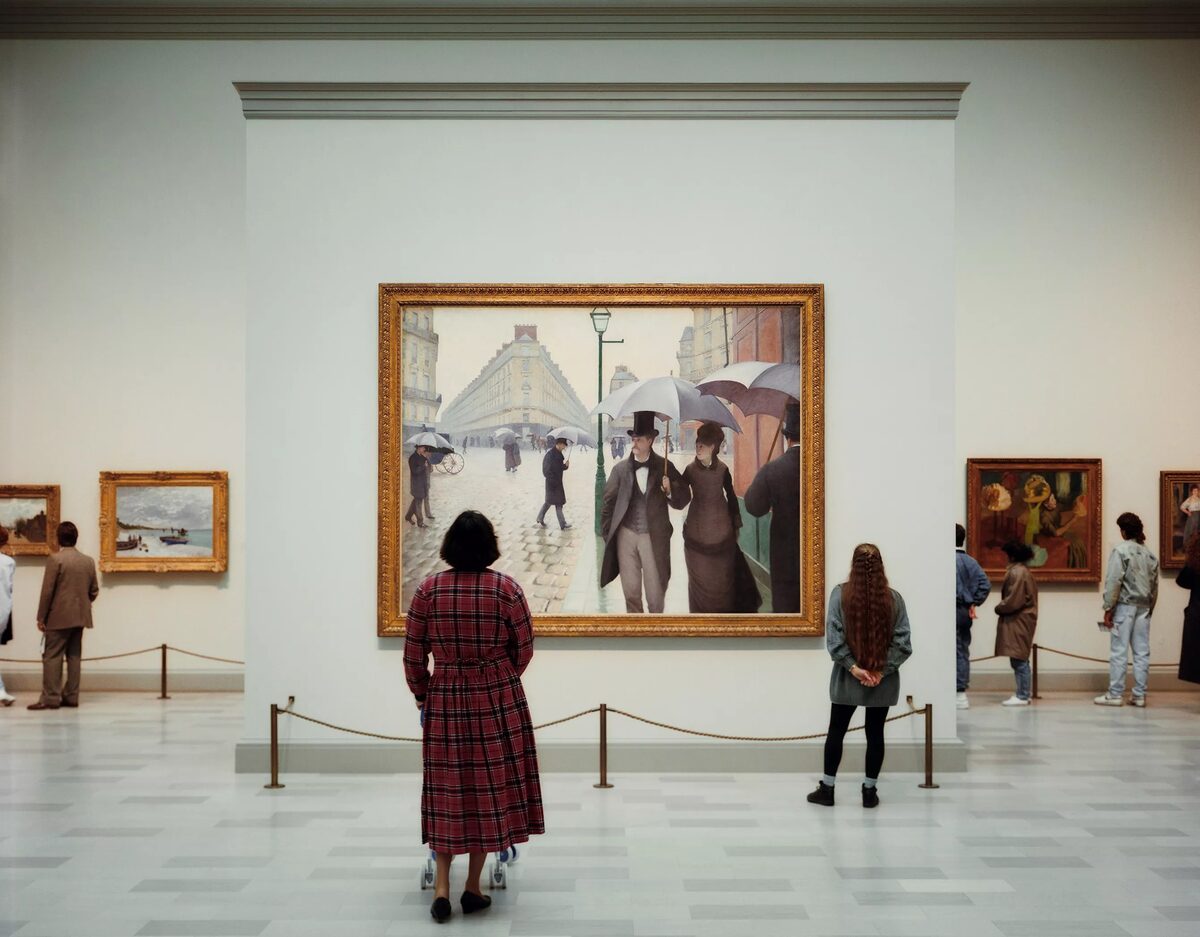
For the current exhibition “ON VIEW – Encounters with the Photographic”, curated in collaboration with Franziska Kunze, Chief Curator Photography and Time-Based Media, Förster focuses on creating a dynamic encounter between nearly 250 works – from milestones of New Objectivity to current trends in photography. This interplay playfully challenges our visual perception.
We asked Simone Förster how this extraordinary selection came together and which highlights visitors can look forward to.
What was the most exciting part of putting this exhibition together? SF: The collaboration with my colleague Franziska Kunze was incredibly inspiring. We brought our two collection areas – contemporary photography and modern photography, covering over 100 years of photographic history – into dialogue for the first time in this exhibition. We present the works not chronologically but across time, thematically, in compelling and often unexpected juxtapositions. By reflecting on works from the other collection area, we often rediscovered or saw works in our own collection in a new light. Seeing the newest works alongside pieces a hundred years old reveals connections that are close, complex, surprising, and enriching. That’s what we want to convey to the audience.
Which works are among your personal highlights? SF: That’s almost a tricky question because, with around 10,000 works in our two collections, selecting roughly 250 for the exhibition was already a real challenge. It felt like our unofficial motto was “kill your darlings”… And now I’m supposed to pick a personal highlight? We have a room in the exhibition titled “The Resistant Body”, showing works that explore the body and the identity of bodies. Beautiful works by Aenne Biermann, Paul Mpagi Sepuya, Germaine Krull, and Ludwig Dressler hang together on one wall – perhaps one of our favorite walls in the exhibition. This arrangement was decided first.
In this room, I was also able to include two photographs from the “Re-visions” series by American photographer Marcia Resnick from the late 1970s. Marcia Resnick is known for her portraits of the New York underground scene of the 1980s; sadly, she passed away just a few weeks ago. In the “Re-visions” series, she stages moments of growing up, adding humorous, sharp, and critical commentary. “Re-visions” is a subtle, personal, and feminist photographic work about coming of age as a woman. I hope to dedicate a separate exhibition to this work in the near future.
How do you combine the older New Objectivity photographs with the newer works of the Becher School to make both sides engaging? SF: Large-scale color works from the Düsseldorf School stand alongside small black-and-white photographs from the 1920s. Large tableaux beside individual works. This already creates a strong visual tension, and content-wise, one can often discover surprising connections: for example, the typological portraits of “People of the 20th Century” by August Sander and Thomas Ruff’s large-scale individual portraits, or the perception of plants or industrial buildings as sculptures in the photographs by Karl Blossfeldt and Bernd and Hilla Becher. We see and understand the motifs in a new way through the photographs – differently than with the naked eye. Seeing is indeed the theme of our exhibition. The title “On View. Encounters with the Photographic” means not only that something is on display, but also “about seeing.” We liked this ambiguity.
How can photography represent something that is essentially invisible? SF: There are images in the exhibition addressing very personal or hard-to-grasp experiences – and one could ask how something like this becomes visible in a photograph. Photography is always “expected” to show something exactly as it happened. That’s true, of course, but photography is also an artistic medium capable of much more than simply recording or documenting. It can show us the world in a way that raises questions, where the visible points to something “behind” it – something not immediately visible in the image, revealing a story, an event, or another narrative. Often this is how themes such as discrimination, violence, or exclusion – which are difficult to represent visually – are explored.
For instance, a 1931 photograph by Germaine Krull depicts a woman hiding her face behind her hands. At first glance, it looks like a beautiful, almost classical study of hands. On a closer look, you notice a third hand embracing a wrist, raising questions: whose hand is it? Is the gesture supportive or intrusive? A new visual narrative emerges from these layered associations.
With so many works in the Ann and Jürgen Wilde Foundation archive, how is such a collection organized? SF: Every work is recorded upon arrival at the museum – inventoried and catalogued. It receives an entry in the inventory with a number, is measured, its material identified, and all information about the motif collected. It is scanned and entered into the database. The physical object is then preserved in conservation-safe materials and stored in a climate suitable for the long-term preservation of photographs. It remains ready for research, exhibitions, or other uses.
How is the key image for an exhibition chosen, especially in a collaboration like this at the Pinakothek der Moderne? SF: Franziska and I first agreed on the exhibition title “On View. Encounters with the Photographic.” As mentioned, we liked the ambiguity of “On View.” Photography always involves seeing, showing, observing, and being observed – hence, encounter. Then we had to select a work for the campaign that could convey this multidimensionality. Many works were considered, including “View from My Studio Window” by Aenne Biermann and the iconic “Self-Portrait with Icarette” by Germaine Krull. Paul Mpagi Sepuya’s “Drop Scene (0X5A0936)” from 2018 shows the artist and another person, partially hidden behind dark curtains, seen through the camera in the mirror – and the mirror itself is visible. Everything is there: seeing, showing, observing, being observed, and encounter.
The curatorial work of Simone Förster demonstrates how photography can resonate across time. Whether juxtaposing historical portraits with contemporary works or staging deeply personal experiences, On View shows how images challenge the way we see while forging new connections between past and present. Visitors are invited not just to observe, but to actively engage in a dialogue with the works in surprising and enriching ways.
A catalog for the exhibition has been published by Hatje Cantz.
“ON VIEW – Encounters with the Photographic”
July 4 – October 12, 2025