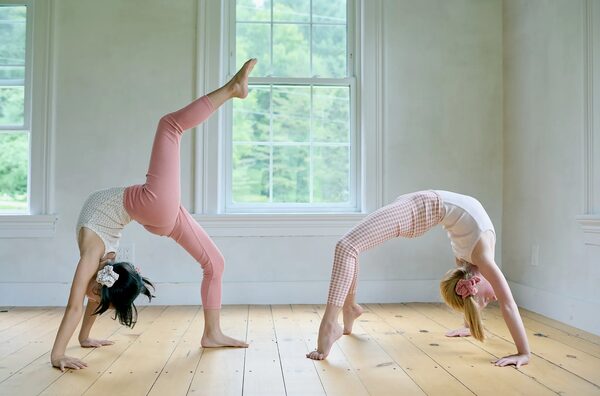
Marco Bienek took on Creative Concept & Art Direction for the current Daylon sunmilk campaign – capturing relaxed settings with young adults spending a day in the sun. Daylong™, developed by Galderma, stands for dermatologically developed sun protection from Switzerland.
With nearly 20 years of experience across Europe, Asia, and the US, Creative Director Marco Bienek brings an internationally shaped perspective to his work. Earlier in his career, he worked at Heimat Berlin, where as a junior and mid-level creative he contributed to campaigns for HORNBACH – experiences that continue to shape his approach to ideas.
Today, he works independently through studio marco bienek on brands and campaigns for Swiss and international clients. Clarity and presence instead of overstatement – work that holds. We introduce the creative and his campaign Enjoy the Sun. Daylong™ on GoSee.
Give us a quick insight: what does your studio stand for – and what do you want your work to create?
Studio Marco Bienek is about finding the essence of a brand and expressing it clearly, honestly, and in an engaging way. It’s less about a fixed team and more about bringing together the right people for each project. This can be individuals, agencies, or production companies. My independence allows me to consciously choose projects — or walk away from them. Real commitment requires a free decision. The “willingness to walk away” is, for me, a form of self-efficacy that gives me energy for my work.
For the “Enjoy the Sun. Daylong™” campaign, together with WE’RR as project lead, we set up a small, focused team for the concept phase: Pia Koller (strategy), Wolfgang Bark (concept & copy), and myself (concept & art direction). For the bexio films, I developed the concept phase directly with director Lukas Kölling – because it felt right for the project.
Fortunately, more and more clients have the courage to embrace such unconventional models.
“Beautifully honest” – what does that mean in your daily work? Where do you draw the line between clarity and simplification?
For me, interesting ideas emerge in the context of honest conversations. Desires, imperfection, vulnerability. That intimacy – and the courage to allow it – is what moves us. It’s how stories can be told in a way that feels true. Without that core, I find it difficult to develop concepts that are relevant for a brand, work on point, and endure over time – while still inspiring production partners and audiences.
After almost two decades in the business – what has fundamentally changed in the way you develop ideas? And what has stayed the same?
When I started, thinking was very much in film and print. Maybe there was the occasional “guerrilla action.” Today, disciplines are increasingly blurred. Fashion works with hospitality, sport with subculture, brands with artists or chefs. These combinations create new perspectives – I find that very exciting.
To explore this openness myself, I co-founded ciao remo together with my partner Cosima Pereira. A hospitality-driven brand that evolves consciously – from events and collaborations to interior. It started with the idea of translating the feeling of a road trip through Italy and France into everyday life.
And then there’s AI. I use it daily, I see its value – and for some projects it’s exactly the right tool. At the same time, new technologies often come with the tendency to be seen as a solution for everything. The question of what moves and inspires us as humans remains human. And that’s why we’re also seeing a counter-movement: a stronger desire for real stories, real encounters, real perspectives. I see that in projects like “Enjoy the Sun. Daylong™”. Turning your face towards the sun – that works best when real people experience real moments.
Campaigns like HORNBACH or Daylong are driven by strong ideas – what was the moment in this project where you thought: “This is why I do what I do”?
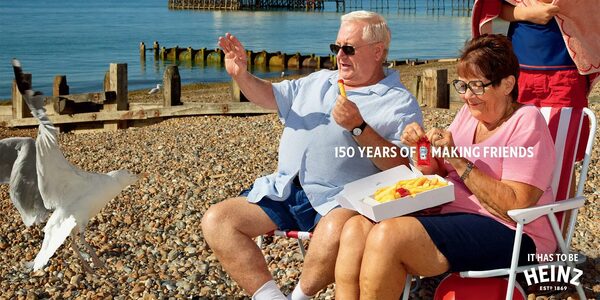
At Heimat in Berlin, I worked as a junior and mid-level creative on HORNBACH. What I took from that experience is that ideas need to be big enough to work across every medium – film, print, event. If an idea can carry all that and is rooted in a real societal observation, it has substance.
This moment usually comes when a concept takes on a life of its own and others begin to make it their own. I often find myself on set, at a shoot or an event, thinking: it’s incredible how many people are now working to bring this idea to life - even though it all started with a single conversation. With Daylong™, that was especially tangible - from the client team to the entire crew on set.
A strong concept is tight enough to define what it’s about – and open enough to leave space. For the concept team, for production, and ideally also for the audience. The time when brands stood on a stage to be admired is over. People want to interpret them and make them their own.
You’ve worked across Europe, Asia, and the US – how much does cultural context influence your creative decisions today? Is there still such a thing as a universal visual language?
It probably all started with curiosity – the drive to discover new things and stay open to different approaches. Exploration is part of my identity. That openness naturally influences how I see things. Whether there is a universal visual language? I’m not sure. There are certainly universal feelings – feeling the sun on your face, enjoying a carefree day. But not every campaign needs that. Highlighting the perspective of a subculture or niche can be just as powerful.
Geographical boundaries still matter – but in times of social media, they are probably also overrated.
What makes a campaign truly relevant today – and when do you know it works?
I usually feel it through the enthusiasm of everyone involved – or, in the case of Daylong™, through the vibe on set, at the launch event, and in the book project that followed, created to engage and motivate people internally at Galderma.
Beyond products and services, brands always have the potential to express an attitude. I believe in that. “Enjoy the Sun. Daylong™” is, at its core, a counterpoint to a rather fear-driven narrative – the idea that you constantly need to protect yourself. Instead, it says: you can feel safe and free. You can enjoy.
And that from the perspective of a sunscreen – with an attitude that aligns with the product. Reduced to the point. Beautifully honest. A better alternative to fear.
Further work by the creative via: studiomarcobienek.com
CREDITS
Creative Concept & Art Direction: Marco Bienek
Creative Concept & Text: Wolfgang Bark
Strategy: Pia Koller
Film: SYNKRON (Yannis Petrone & Tim Holder)
Photo & Film Production: Marty–Trezzini
Photography: Cyrill Matter
Client Lead: Lynn Santangelo, Galderma
Project Lead: WE'RR