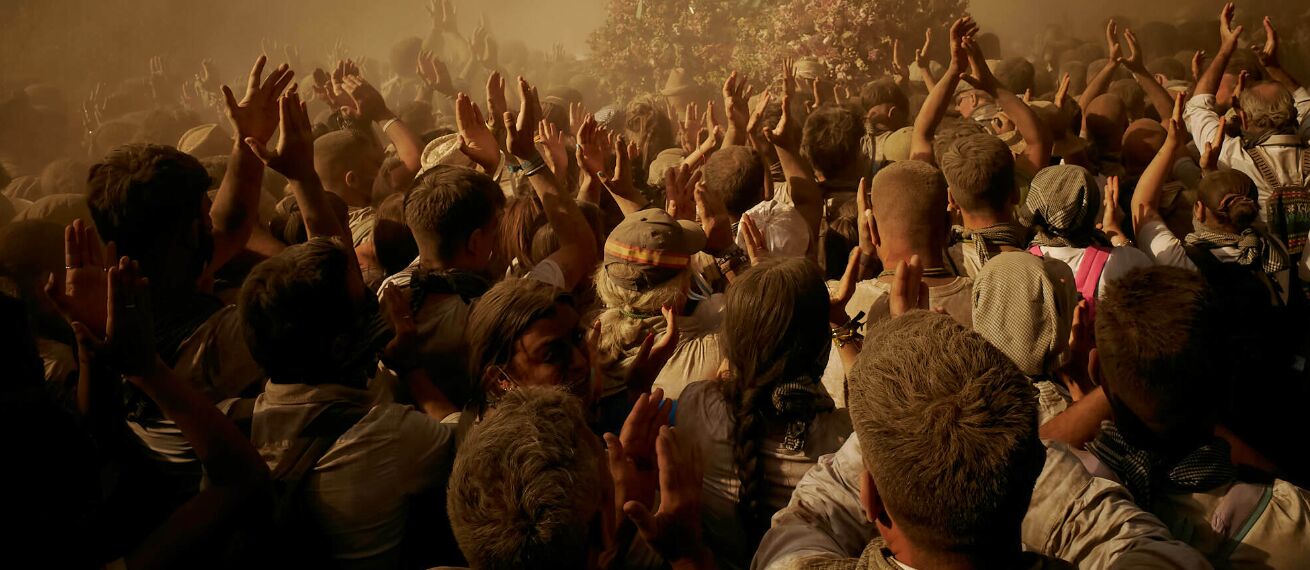
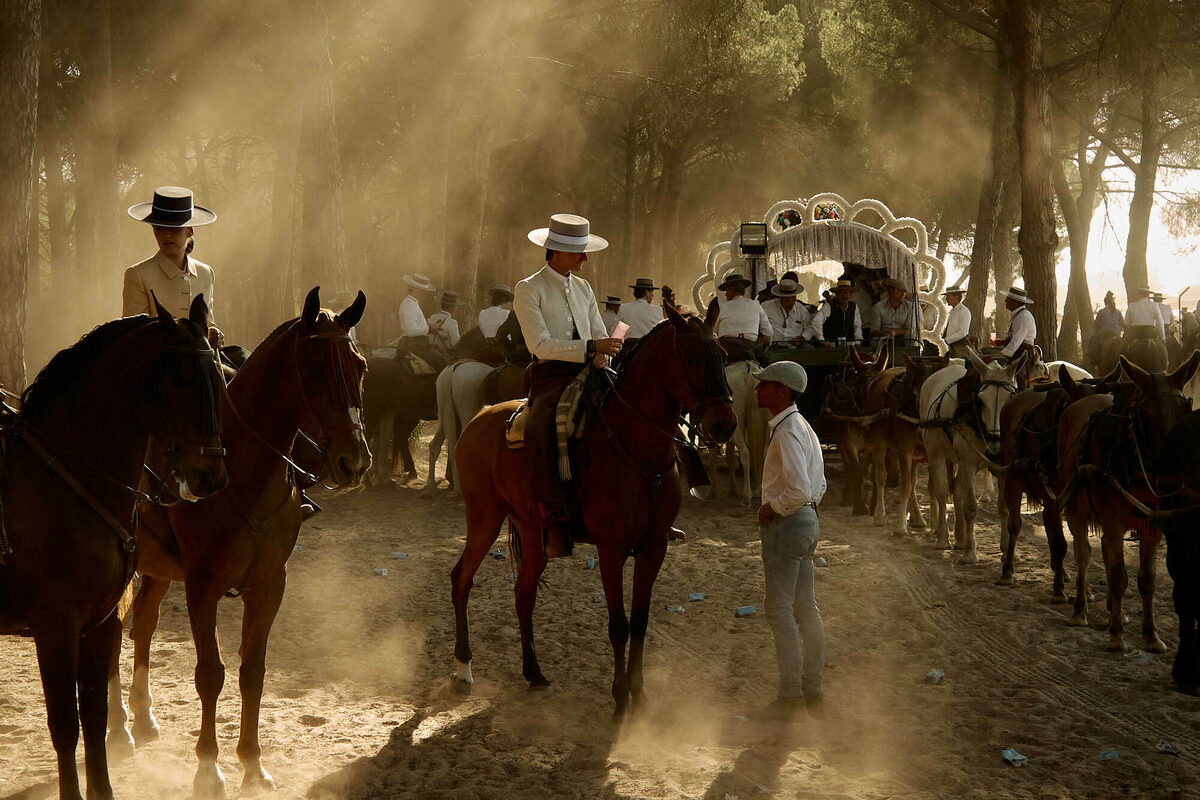
Tobias SCHULT c/o EMEIS DEUBEL reiste nach El Rocío in Analusien, Spanien, um die jährliche Wallfahrt zu dokumentieren. Über eine Million Pilger – Romeros – kommen zu Pfingsten zur Wallfahrt – Romería – in die kleine Stadt, die sonst nur überschaubare 2000 Einwohner zählt.
Über 100 Bruderschaften reisen aus ganz Spanien und teilweise aus dem Ausland an. Auf ihrer traditionell festgelegten Route, dem Camino nach El Rocío, besuchen sie andere Bruderschaften. Ein bekannter Ort, den viele Bruderschaften durchqueren, ist Villamanrique de la Condesa in der Provinz Sevilla.
Am Samstag vor Pfingsten reiten, fahren und marschieren die Bruderschaften in El Rocío ein und passieren die Wallfahrtskirche, die Ermita, wo sie willkommen geheißen werden. Danach geht es weiter zu ihren Häusern, die sonst das ganze Jahr über leer stehen.
Im Jahr 2023 wurde die Pilgerreise zum nationalen Kulturgut erklärt. Im selben Jahr schlug die Vox-Fraktion im andalusischen Parlament ihre Kandidatur für die Aufnahme in das immaterielle Kulturerbe der Menschheit der UNESCO vor. Es gibt Zehntausende christliche Pilgerstätten. Die weltweit größten jährlichen Wallfahrten finden zur Basilika der Jungfrau von Guadalupe (ca. 20 Mio. Pilger) und zu den Pilgerstätten Roms (ca. 18 Mio. Pilger) statt.