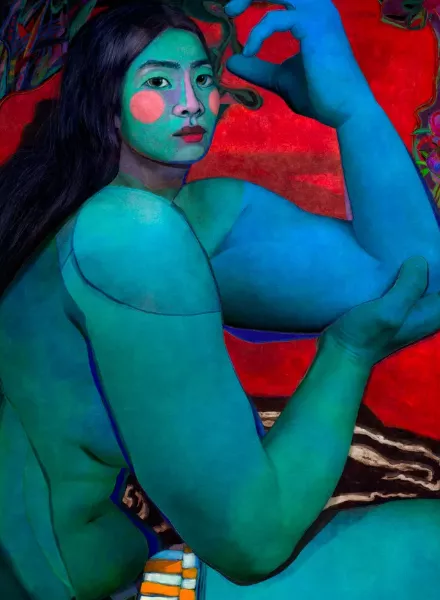
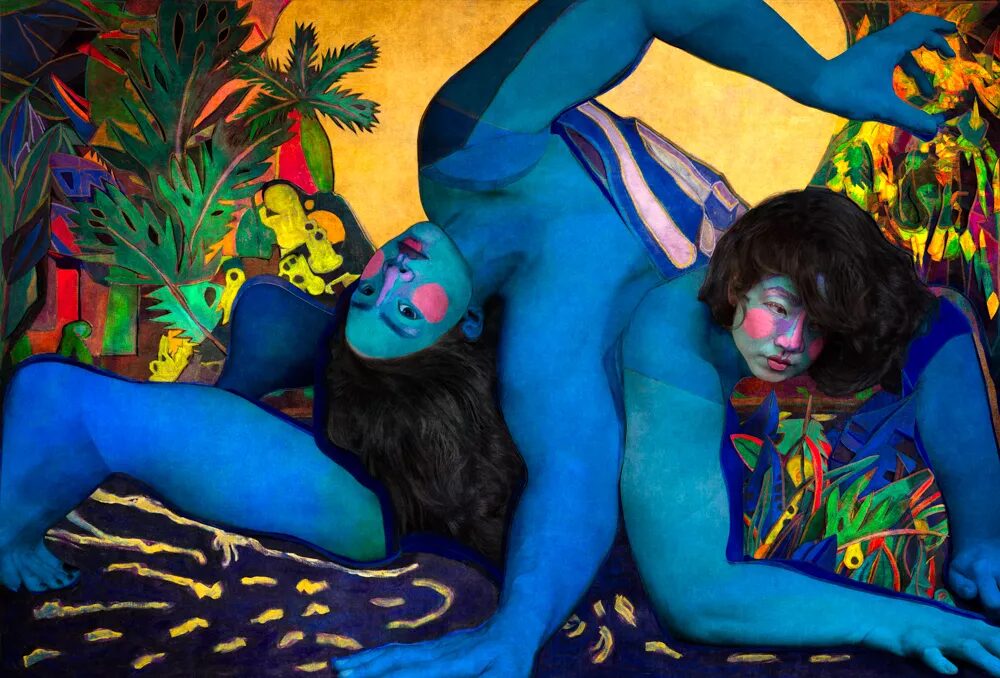
Das FOTOGRAFISKA BERLIN möchte mit HYSTERIA vom Künstlerduo Cooper & Gorfer keine klassische Fotoausstellung zeigen, sondern ein sinnlich-intellektuelles Erlebnis, das zur Auseinandersetzung einlädt – mit uns selbst, mit Erinnerung, mit Wandel.
Sarah Cooper (USA/Schweden, 1974) und Nina Gorfer (Österreich, 1979) arbeiten seit 2006 als Künstlerduo zusammen. Während Cooper eine klassische Fotografenausbildung absolvierte, studierte Gorfer Architektur an der Universität für angewandte Kunst Wien bei Zaha Hadid. Gemeinsam haben sie eine visuelle Sprache entwickelt, die Fotografie mit Malerei, Collage, Textilkunst und Video verbindet.
Im Zentrum ihrer Arbeit steht das Porträt – vor allem das Frauenporträt – als Spiegel kultureller Identität, Erinnerung und Zugehörigkeit. Ihre Werke entstehen in einem Zusammenspiel aus fotografischen Aufnahmen, Texturen, Materialien und Erzählungen. Cooper & Gorfer reisen für ihre Projekte, begegnen den porträtierten Frauen persönlich und verweben deren Geschichten mit kulturellen Bezügen zu emotional aufgeladenen Bildwelten.
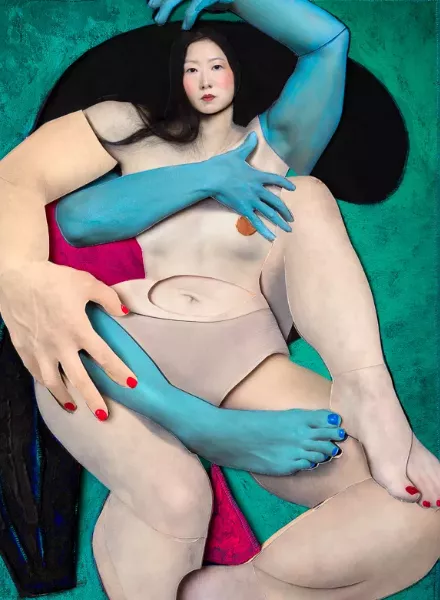
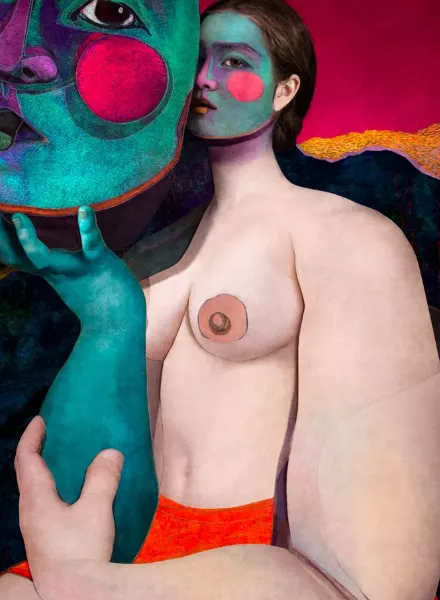
In HYSTERIA loten Cooper & Gorfer die Grenzen zwischen Malerei, Collage und Fotografie neu aus. Die Künstlerinnen konstruieren kolossale Frauenkörper in unterschiedlichen Stadien der Transformation – inspiriert von der Kraft unsterblicher Göttinnen. Entstanden ist eine fiktive, mythologische Frauen-Dynastie: ein Stamm weiblicher Figuren, geboren aus einem imaginären Körperarchiv. Die Ursprungsidee für diese hybriden Figuren basiert auf dem surrealistischen Spiel Cadavre Exquis. Dabei entsteht ein gemeinsames Bild, das in zwei voneinander verdeckten Hälften gezeichnet wird. Auch bei Cooper & Gorfer teilen sich die entstandenen Körper Arme, Beine und Gesichter – sie bestehen aus mehreren Frauen zugleich. Aus dem Bildrahmen hervorbrechend, wachsen die Figuren zu monumentalen Erscheinungen – kraftvoll, vielschichtig und entrückt.
Im Interview mit GoSee geben Cooper & Gorfer einen tiefen Einblick in ihre künstlerische Praxis, erzählen von der Kraft des Chaos, unerwarteten Begegnungen auf ihren Reisen – und davon, warum ihre Porträts manchmal mehr über Identität verraten können als Worte es je könnten.
If your portraits could speak – would they whisper, scream, or sing? And what do you think they might tell us about identity that you yourselves couldn’t quite put into words? Cooper & Gorfer: They would sing, but in a strange and layered harmony — one where dissonance and beauty coexist. Our work grounded in the idea that identity is never singular or fixed. That we are fluid, fragmentary beings, and that we are forever becoming. Our portraits embrace these contradictions comfortably, allowing them to express the complexity of selfhood in a way that words often cannot.
Your works are composed of many fragments and body parts – have you ever accidentally given someone an extra leg? Or to put it differently: how much chaos does a good artwork actually need? Cooper & Gorfer: There’s always a little chaos in the process — it’s part of the alchemy! Every composition contains a hundred small decisions that feel almost like chance encounters. Occasionally, a figure may sprout an extra limb during our collage process, bringing an unforeseen element that opens new interpretations and new ways of seeing. We definitely embrace this playful disorder, even, or maybe precisely because we are real control freaks when it comes to composition. A bit of chaos allows room for surprises and can breathe life into a work. It reminds us that beauty rarely arrives without a touch of messiness — and a hint of the imperfect.
You travel widely, collecting stories and turning them into visual narratives. Was there ever a place or moment that completely threw you off – in the best, most inspiring way? Cooper & Gorfer: We often seek places that shift our understanding — from rural villages in Kyrgyzstan to remote corners of Iceland or the wide, open landscapes of Argentina. Our journeys grow out of a deep curiosity for people’s stories and collective memories, and they depend on long conversations and collaborations with those we photograph. One experience that stayed with us was meeting families from the Mapuche community in Northern Argentina, where, as two white women from Europe and the US, we suddenly found ourselves representing a painful colonial past. We were deeply humbled by this realization. That encounter dissolved our expectations of what the trip would yield and reshaped our process for the entire series.
What role do you think art plays today in helping us navigate complex emotions and collective memories, especially through a medium as layered and multifaceted as your collage work? Cooper & Gorfer: Art gives us permission to hold contradictions. In our artistic practice, we use collage to mirror the way we experience the world: through fragments, glimpses, and overlapping histories. In turbulent times, this feels especially vital. Our layered compositions allow personal stories to merge with archetypes, the collective experience, and cultural memories, creating a visual space where the complexities of human life can surface. It’s less about providing answers and more about creating a sanctuary for nuance – a place where we can face our emotions and histories with honesty and empathy.
Cooper & Gorfer: We’re thrilled to take you behind the scenes of one of our most ambitious artworks, in our new exhibition, Hysteria. This monumental collaged work isn’t just a highlight of the show — it’s also the largest piece we’ve ever created. Its sheer scale made it a bold and challenging project. This short documentary captures the effort, creativity, and dedication that went into bringing it to life. ––– The Twin Altar
Cooper & Gorfer – HYSTERIA
13. Juni – 12. Oktober 2025, Fotografiska Berlin