Algae farms in the middle of the desert, sterile laboratories for cultivated meat, underground greenhouses where robots tend to plants, and research facilities simulating future food systems for missions to the Moon and Mars. With his new book “Cockaigne”, Austrian photographer Gregor Sailer opens doors to places that usually remain hidden – the highly complex infrastructures behind modern food production.
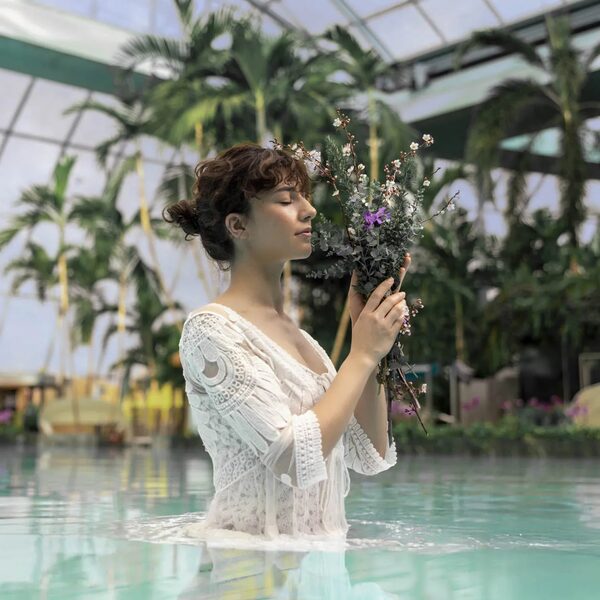
Working with an analog large-format camera, Sailer photographs underground and vertical farms, robotic greenhouses, research labs for cell cultures, and production sites for algae, insects or jellyfish. His images combine documentary precision with an almost surreal visual language – spaces where technology, nature and human ingenuity meet in unexpected ways.
The title “Cockaigne” refers to the medieval myth of the Land of Milk and Honey – a vision of limitless abundance. Sailer's photographs, however, reveal a far more complex reality: highly optimized production systems where innovation, efficiency and sustainability collide with ecological limits, global power structures and new ethical questions.
Gregor Sailer (b. 1980) is an Austrian photographer working at the intersection of art, science and architecture. In his projects, he explores how architectural structures and buildings can reflect economic, political and social ideas. Many of his photographs are created in remote or hard-to-access locations. His work has been exhibited internationally and is held in numerous public and private collections. “Cockaigne” is already his fifth book with Kehrer Verlag – and at the same time a striking photographic journey into the hidden architecture of our future food systems.
Gregor Sailer – Cockaigne
Kehrer Verlag, 296 pages, 150 color illustrations
Design: Studio Victor Balko
Texts by: David Julian McClements, Lisa Ortner-Kreil, Gregor Sailer, Stefan Tagwerker
Exhibition:
Cockaigne. Future Land of Milk and Honey?
Natural History Museum Vienna, Austria
11 February 2026 – 19 July 2026