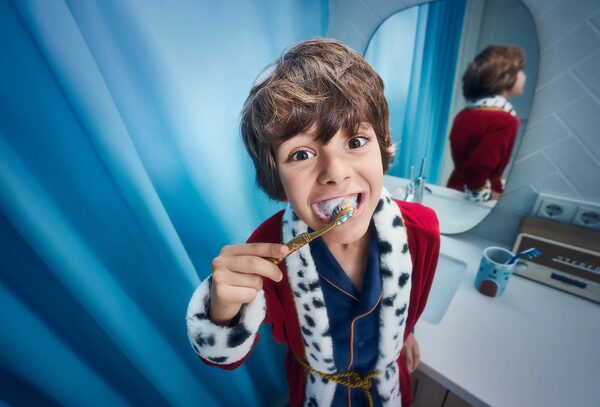
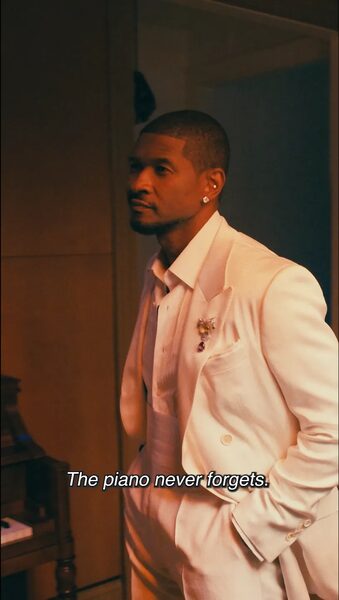
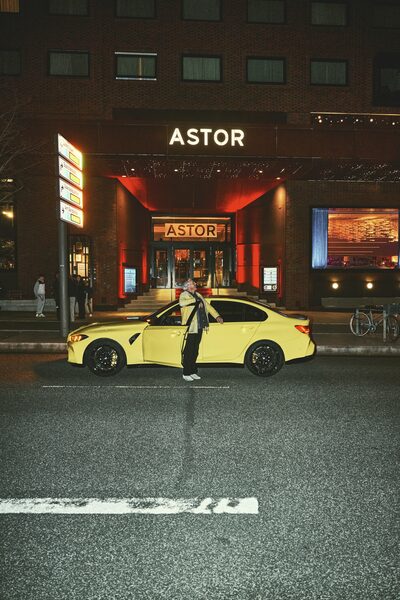
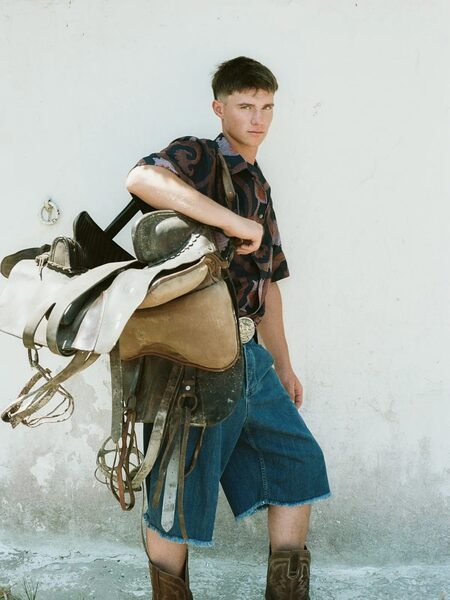
Darius Ramazani is an established advertising photographer who moves effortlessly between corporate, lifestyle, and documentary work. His images are intimate—direct, warm, and always on equal footing with the people in front of the camera. On set, his experience is valued, as is his open manner—a combination that sustains projects and brings teams together.
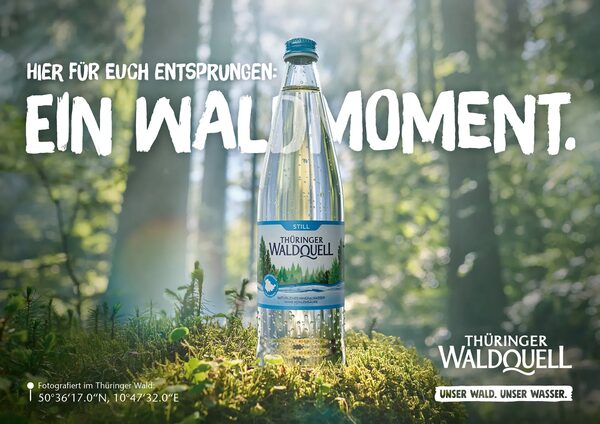
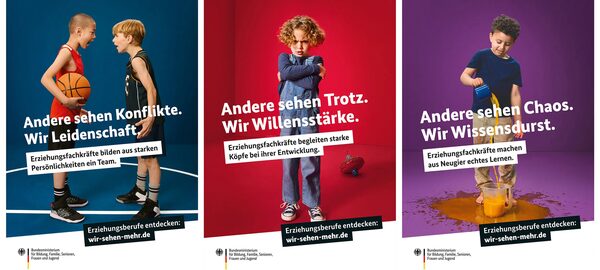
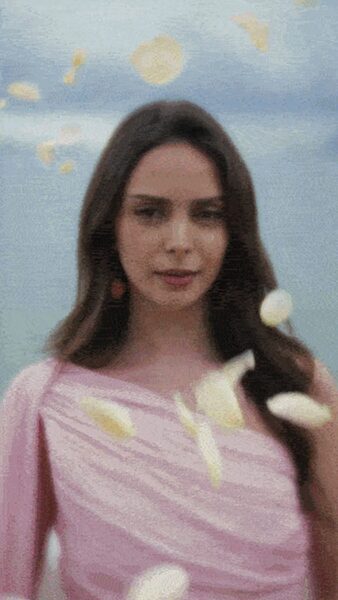
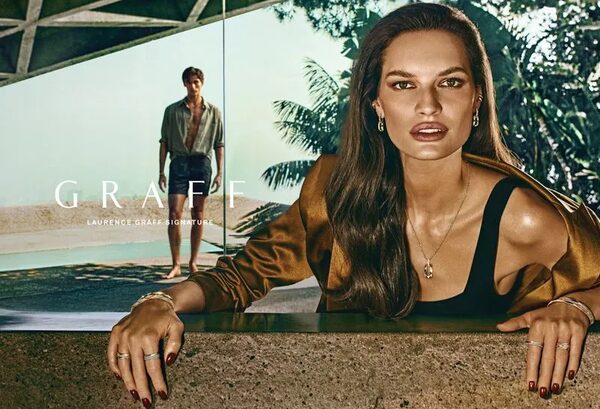
In recent months, his portfolio has ranged from campaigns for IG Metall (agency: Ballhaus West), Elisabethen Quelle with Evren Gezer (agency: Damm+Bierbaum), and Weleda with Annika Lau (agency: Ad Alliance) to projects such as "Freunde fürs Leben e.V." (Friends for Life).
In parallel, he has exhibited his work—including at the Augustinermuseum Freiburg ("Alter"), on Teufelsberg, and at Holzmarkt in Berlin. A central theme in his work remains humanity, as seen, for example, in his series about the animal rights activists of the association Hauptstadttiere e.V. (Capital City Animals).
Alongside his photographic work, Darius pursues an idea with his billboard project in Berlin that has become rare in this form: space for free, unfiltered creativity in public spaces.
For several years now, he has been using and financing his now legendary billboard at Stuttgarter Platz week after week – a place steeped in history, which today once again becomes a stage for new visual statements. Copywriters, illustrators, painters, typography enthusiasts, photographers, and other creative minds come and go here, demonstrating what a wall can look like when you simply let it be: loud or quiet, vibrant or minimalist, playfully kitschy, political, and sometimes simply beautiful.
As Darius himself puts it: "We want to play and try things out – but our hearts beat for what is good, beautiful, and true. We have chosen the light side of the Force."
The billboard thus becomes an open playground – a counterpoint to overly optimized campaign spaces, and at the same time a genuine piece of vibrant creative culture in the city.
What happens faster on set – capturing the perfect moment or infecting everyone with your energy? The right energy always comes first. That's why my team is so crucial. We work together really well, we trust each other – and that feels a bit like home. The people in front of the camera feel exactly the same way:
During our shoots, an atmosphere quickly develops where everyone feels comfortable. No one tries to steal the spotlight. The focus is always on the protagonists and models – they are the real stars. When the mood is right and the energy is right, it's immediately reflected in the photos. And you can see that in them.
If your billboard could talk – what would it say about the creative scene after all these years? “Nothing ventured, nothing gained” – it sounds cliché, but it fits quite well here. In the beginning, I was rather ridiculed for the large-format advertising. Nevertheless, from the start, I had the feeling that it was the right path and that it was worth sticking with it. Now things have changed: The topic has resonated with many people, the press has reported on it several times, and even television has been on location.
For me, this also shows how important short lines of communication are when it comes to creative work. In traditional agency structures with endless rounds of coordination between client and creative team, what often gets lost is precisely what makes an idea powerful. Everything is smoothed over, formulated as risk-free as possible – no one wants to rock the boat or take responsibility. In the end, it's often a compromise. But compromises like that have no place on a large billboard. What's needed are clear, bold ideas that take a stand.
What was the craziest or most unexpected image that's ever been displayed there – the one that made you think, "That's exactly why we're doing this"? The greatest joy now is that many people approach me with ideas, and I also approach artists and NGOs with ideas to design this large billboard with themes. There was an article in the Tagesspiegel that described it well: "...a large billboard for humanity, community, and a better world." That's what it's all about – simply giving many people a platform. NGOs, artists, designers, illustrators, writers, etc.! But we often have very funny things too; humor is essential! I've always been very socially engaged; even my photography often revolves around social issues. I'm a photographer with a focus on PEOPLE, so it's a natural fit.
Are there any ideas that made you hesitate to put up - but then went ahead and did it anyway? A friend of mine, Nicolas Höfer, had the idea for a campaign for EXIT. EXIT-Germany is a specialized initiative that helps people leave the far-right scene and supports them in building a new life. Since 2000, the organization has offered individual counseling, help in distancing oneself from far-right ideology, safety in times of threat, and support in finding employment and housing.
Together with Alf Frommer, the two of them further developed the concept. We then released the image in January—and it went viral. It was shared countless times on Instagram and other social media channels, and several organizations also featured it in their feeds. That was pretty impressive. Of course, there was also a lot of backlash. Sometimes it was pretty intense what I had to listen to – and in the end, it just goes in one ear and out the other.
How long does a good picture last on your wall before you're already itching to see the next one? That's a very good question. If I had the chance, I'd probably book three more walls, simply to display even more content. There's so much to tell and so much to show. I'm like the Very Hungry Caterpillar – I soak up impressions and stories like crazy.
Who's more likely to dare to tackle your billboard: the young and unflappable ones, or the experienced and confident ones? Analog (the experienced and confident ones) meets digital (the young and unflappable ones). The great thing about this large-format work is that it functions both analog and digitally simultaneously. The design is printed traditionally on paper and then pasted up as a poster. In the next step, we photograph the surface and produce a short video, which we then share with the digital world via social media. This combination is precisely where the added value lies: analog and digital intertwine and reinforce each other. The young and the experienced benefit from each other.
How often do you stand in front of it yourself and think – wow, we actually do this every week? This is a passion project – just like my photography. Both are great passions. I also always call it: "THE photographer with the large-format work." Many people think I only do large-format work now. But one doesn't work without the other.
Darius's "large-scale" project exists primarily offline in the urban space, and you can find it through scattered online traces, but not as a traditional website. If you have an idea that belongs on Darius's billboard, feel free to contact him. Darius goes through the world with open eyes and ears and is always happy to meet new people.