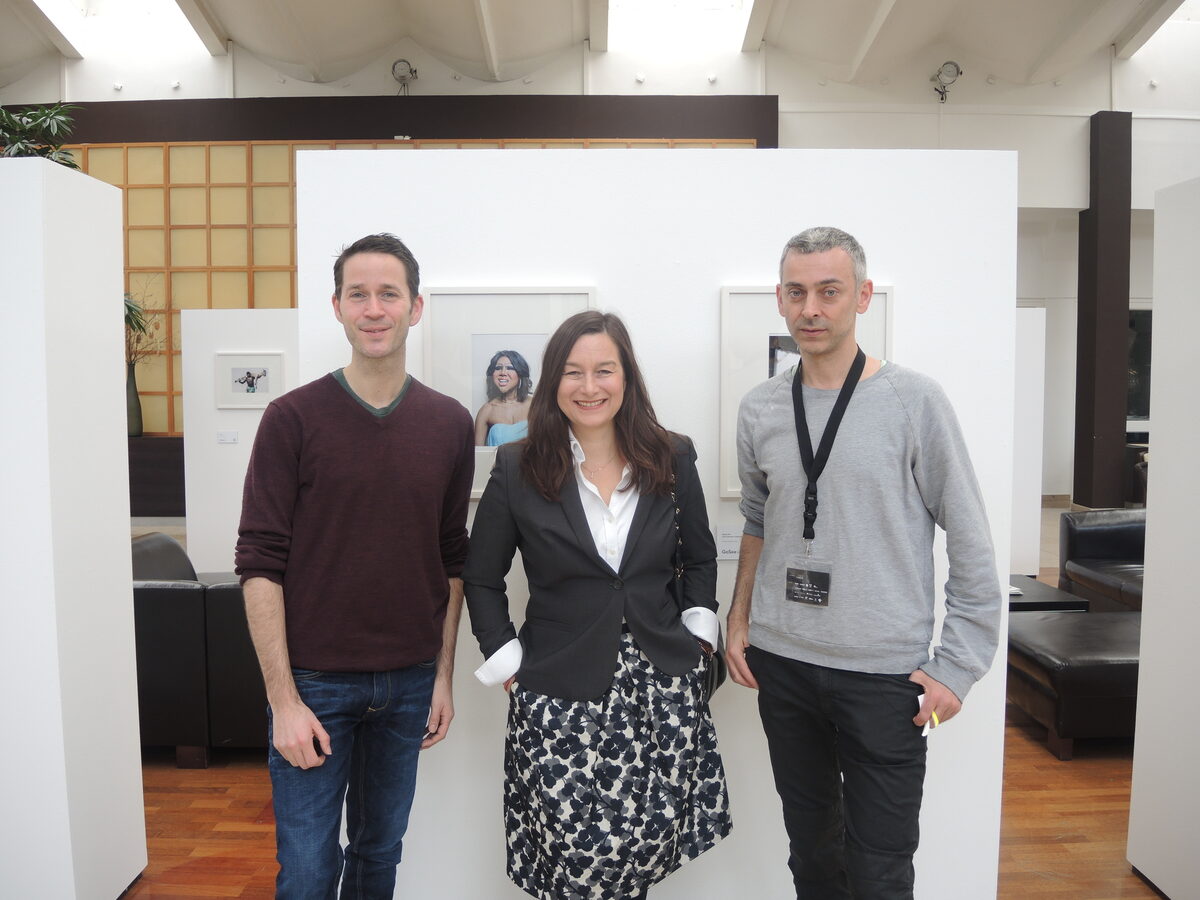
Week after week, Frances Uckermann, Art Director at STERN MAG, makes decisions together with her team of picture editors, graphic designers, and infographic designers on how to visually present political, cultural and business topics in STERN magazine – which report will be published, how many double pages are feasible, and who will make it onto the cover. Since April 2014, Art Director Frances Uckermann has shaped the face of STERN. Prior to that, she headed the graphic design department and worked with the former AD Johannes Erler on the relaunch of the magazine. Editorial design, art direction, lecturing, digital media design, and magazine development – these are the topics she deals with. Frances Uckermann studied visual communication in Kassel, and has already worked from 1993 to 1998 in all visual departments at STERN and, as Art Director, has played a leading role for the magazines Allegra, Stern Campus, Zeit Wissen, and the Zeit Studienführer (study guide).
GoSee met up with Frances Uckermann during the Fotofrühling (photo spring) event in Zingst on the Baltic Sea, where she held a keynote presentation about her work at STERN. Since the audience was just as inspired as we were, we thought we'd invite Frances on a GoSee Quest...
As Art Director at STERN your position comes right after the Chief Editor and, together with the picture editor, you are responsible for the visual appearance of the magazine. A 24/7 job?
At least mentally. At Stern we combine current issues with long-term stories. Which means, there is always something to do, and it can become very time consuming for the editing department, especially on production days. And, of course, I always look for ideas and challenges in my spare time. You don’t just shut your eyes. But I still get some sleep, thank you!
What would you say makes your job special?
Besides the combination of typography, graphic design, digital media design, illustration and photography, the special thing for me is working with so many different types of people, their ideas, approaches, and experiences – and ultimately creating a product with them. In fact, a new one every week. This kind of team work and the broad range of topics, for which Stern is known, are unique. It is very exciting to decide within half an hour how we can best visualize the crisis in Greece, or how the Extra Mode (fashion extra) will look, and who's photo would look good next to the German Chancellor. And I like working on current issues.
What areas do you personally like to design and curate most and why… culture, politics, reports… ?
I have no special preference. Each topic has its own charm. I really love stories that show the passion and commitment of the photographer. The challenge then is bringing these stories into the magazine so that this feeling is communicated to the readers.
You and your team are constantly searching for visually appealing topics. What appeals to you here or how can your photographer's heart be won?
There is no general rule for this. But I enjoy it very much, when photographers not only think in individual shots but tell stories like I mentioned before. When they treat the people they photograph with respect and are able to show the complexity that is within every person in the pictures they take.
Here are two examples: The story of the couple Shane and Maggie, where the young American photographer Sara Lewkovicz accompanied a young ex-convict on his difficult way back into society. It tells a very startling but also very touching story of the problems the couple and their two children encounter. The photo of Shane beating his girl friend has been shown many times (Sara had already called the police long before she took the pictures by the way). But the story, the way we printed it, is much more complex, than this picture could have ever led you to suspect. And we thank Sara for this, who was very close to the story for many months – and who stuck to it.
Another story I remember is Florian Müller’s tour through the world of fetishists and the BDSM scene. In a fantastic way, he finds a balance between the bizarre, the most intimately human and the erotic, which are all part of this topic. Photographs that only he could have made because those depicted in them felt that they could trust him and that he was truly interested in them. I could name a dozen other works, but I think, you got the idea.
Key word – close-ups in STERN. Following the terrorist attack on Charlie Hebdo in Paris, you released pictures of the crime scene. Do you often discuss the balancing act between informative journalism and doubts about it in the office?
Not in the sense that we constantly discuss basic principles. Of course we adhere to special rules and, in this case, we pixeled out the particular photograph. However, with all that's happening all over the world today, we clearly cannot only show pictures of an ideal world. We owe the public the truth; but, we do not shock just for the sake of it.
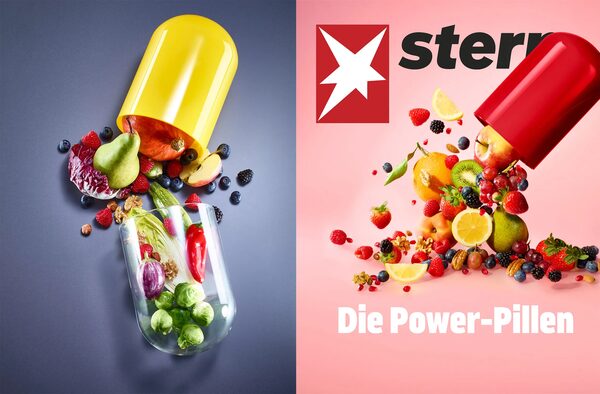
The cover of STERN is a big deal each and every week. How do you select the photographers and illustrators, or can you just apply for a job?
Of course you can put in an application. Good ideas are always welcome. Anyone interested, i.e. illustrators, graphic designers or photographers can create a collage for 5 different STERN cover stories of their choice and submit them to me. I will definitely respond! We do have a team of several people we work with, each of them with their own area of expertise. We know we can count on them and, if necessary, they can produce great results even under pressure. We have quite a long list of names, and of pictures, which I would like to see on the cover one day.
Besides having a family and a full-time job, you also teach at the Henri-Nannen School of Journalism about the subject graphic design. Do your students love you or 'fear' you?
Since the students only see me during the introductory courses in newspaper and magazine design, and since I'm not in a position to decide on their future careers, I would assume neither is true. But I must add, these are courses for young journalism students, and I explain to them why their printed pages cannot only contain text. We do not teach graphic design there, I’m sad to say. I think the future of magazines belongs to those who can creatively combine visual effects and journalism in their minds as well as in print.
In your presentation you gave photographers important tips which make life easier for both sides. Can you repeat these for us?
My feedback was mainly focused on the websites of some photographers who don’t always make it easy for picture editors, Art Directors or Art Buyers. For instance: a picture editor sees great works of a photographer somewhere, the credit on the works is the photographer photographer's own name "John Sample". But the photographer named his website "Snapshot.com" or "Lightworks.com" and is therefore hard to find on Google.
Or they use cryptic menu names like portfolio 1, 2 and 3, leaving you the tiresome task of clicking through until you find what you’re looking for. Image files should have a proper name so that you can trace where they came from after you have downloaded them. Tokyo, Cape Town, New York, or Berlin might sound very impressive as a hometown. But for commissioning a job, it is much more important to know the current address of the photographer.
You can’t tell that from a cell phone number alone or an email address. And there is often no information about what, when and for whom the work was done. Freelance work? Commissioned? Published? A bit more information would be great.
I also find sites annoying, where you have to watch long animations and "catch" individual pictures out of a running series of photographs to navigate. One last thing, sorting channels: Keeping your own website up-to-date is time-consuming. So photographers often also have a blog. Besides their own work, the blog often contains photos found somewhere else, without telling the user who did what.
We are very happy that our GoSee Newsletter actually made it onto your desktop. What is it you look for in the News or on our site?
I naturally tend to stick to the editorial work, but I always scroll through everything, pick up inspiration and trends, or look for talents I don't know yet. Particularly appealing to me is the unual or things I would have otherwise never seen.
Working amidst all this photography, we want to know – do you surround yourself with pictures at home as well. Do you collect photographs or do you have another hobby?
I don't collect things. But when I look at my overloaded shelves full of photobooks, I’m not too sure anymore…
Do you have a few tips for our readers about what to see in Hamburg, an unknown gallery, an antiques store, or your favorite bar?
Hamburg is a beautiful city to sit outdoors. In the morning, you can sit in the sun in front of the Pony Bar, next to the fabulous Abaton movie theater and watch beautiful people go by. Unfortunately, I have to work at that time. Hamburg also has fantastic galleries for young and new art and photography that are often underrated. There's no specific one. On second thought: Robert Morat shows photography of consistently high quality. My tip would be to check the website for the next Phototriennale in June, you'll find a list of most of them there. A visit to some of the independent galleries like the Hinterconti on Marktstrasse, the Sfeir-Semler Gallery in der Admiralitätstrasse oder bei White Trash Contemporary on Paulsenplatz can be very interesting.
Now – if you are interested in knowing what 'Meine Mutter Hannelore', 'Abgefahren', 'Der Zweite Blick', are all about… have a look at the wonderful artwork on GoSee. We have several works from our GoSee friend Frances, which were printed in STERN.
About - STERN. Henri Nannen created the magazine out of the youth paper Zick Zack and the first issue appeared on 1 August 1948. This was possible after obtaining a license from the British military government to rename Zick-Zack to Stern, for which Nannen had taken over the licence a few months before. The first issue had 16 pages, with the cover showing actress Hildegard Knef.[6] Nannen also edited the magazine of which headquarters is in Hamburg. In 1965 the magazine was sold to Gruner + Jahr. stern.de