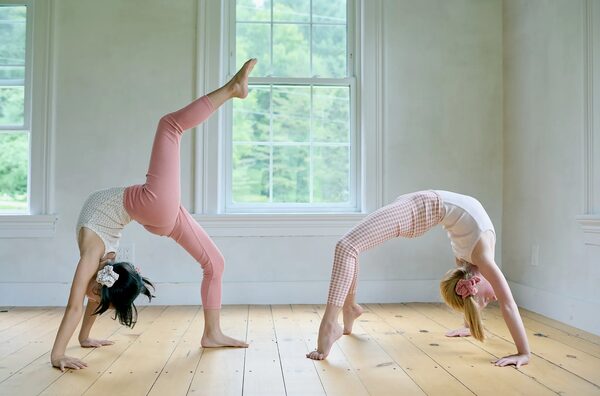
Vivienne Mok ist bekannt für ihre romantischen Porträts und die gekonnt inszenierte Darstellung weiblicher Modelle. Ihre Arbeiten ziehen Parallelen zu kunsthistorischen Epochen und erinnern an Rubens, die Präraffaeliten oder den Jugendstil. Sie zeigen vielfältige Körperformen, die in ein charakteristisches sanftes Licht getaucht sind, und strahlen eine Atmosphäre aus, die an einen frischen Sommermorgen oder einen Herbstnachmittag erinnert.
Die Natur spielt in ihren Bildern eine zentrale Rolle, ebenso wie die Kulisse boudoirähnlicher Interieurs, die oft die opulente Ästhetik der alten Meister widerspiegeln. Die Fotografin schlägt eine Brücke zwischen Vergangenheit und Gegenwart, indem sie barocke weibliche Figuren mit poetischen Szenen kombiniert, in denen androgyn wirkende junge Männer auftreten. Mit ihrem einzigartigen Ansatz erzählt Vivienne Mok nicht nur visuelle Geschichten, sondern lädt den Betrachter auch ein, in eine märchenhafte Welt voller Fantasie und Schönheit einzutauchen.
Vivienne Moks Debütbuch 'Visions of Flora' präsentiert eine kuratierte Auswahl von 190 Bildern aus den letzten 15 Jahren, die am besten das Wesen, die verschiedenen Phasen und Facetten ihrer Fotografie repräsentieren, einschließlich neuer, unveröffentlichter Bilder. Es ist auch eine Feier der Schönheit, der Weiblichkeit, der Natur, der Verzauberung, der Stille und der Zeitlosigkeit.
Das Buch, veröffentlicht von Snap Collective (snap-collective.com), hat 192 Seiten und wird im A4-Hochformat präsentiert. Es nutzt umweltfreundliche Print-on-Demand-Technologie, ist auf hochwertigem 170 g/m²-Papier gedruckt und mit modernster Digital-Offset-Technologie hergestellt, mit einem Hardcover-Einband. Wir stellen Euch das Buch und die Fotografin samt Interview auf GoSee vor.
GoSee: Which artists or art movements have inspired you the most, and how do these influences reflect in your work? Vivienne Mok: Growing up, the artistic movement that most influenced me as a child was Impressionism. Generally speaking, I am drawn to many classical painters, including Botticelli, Waterhouse, Frederic Leighton, Alphonse Mucha, etc. But I would say these inspirations are somewhat integrated into my artistic vision, rather than something I actively study. When I started photography, my inspirations weren’t specifically focused on a certain painter or art movement, but rather a combination of many influences, both artistic and from daily life. Over time, I have collected many little old things (books, chairs, fabrics, clothes) that you can see in my pictures, adding a vintage touch. My earlier work has more of a light, romantic 70s aesthetic, influenced partly by the bedroom I grew up in and its rose-patterned wallpaper (often visible in my work). In contrast, my later work leans more towards pictorialism and includes more outdoor landscapes.
Can you tell us a bit about your creative process? How does a typical photo series start for you? It depends; sometimes I see a location or certain plants, and it starts from there. Other times, I see the model first and take it from there. I put a lot of time into preparing for each shoot. Planning isn’t everything, and since magic tends to happen somewhat spontaneously, it’s important to be prepared.
What do you look for in the models you select? Are there specific traits or characteristics that are important to you? I look for special faces that can work well with the timelessness of my images. But in the end, anyone can be a model if we can build enough trust while working together. Sometimes, for some specific projects, I look for certain body types, or specific features like extremely long hair.
What role does nature play in your images, and how do you select your locations? Nature plays a big role in my images because it is part of my life. I live close to nature and like to work with plants. Where I live in Switzerland, you can always stumble across gorgeous scenery, from beautiful lakes to hidden gems in the forest. I choose my locations based on their timelessness (usually water or greenery, sometimes simply in my garden) and seasonal features (such as spring flowers, autumn leaves, etc).
How do you succeed in telling a story in a single image? The combination of the location, the model’s expression or pose, the composition, and the use of light all help tell a story. Usually, when the model doesn’t look like she’s posing but instead becomes part of the scene, we can even forget it’s a staged picture altogether. But sometimes, a simple expressive portrait can be worth a thousand words.
What role do light and color play in your photography, and how do they influence the mood of your images? Light, of course, plays an extremely important role. The use of soft, natural light gives the image a dreamy aesthetic, and makes my photography immediately recognizable. Color is just as important; warmer or cooler tones can tell completely different stories. I often like to work with tone-on-tone colors.
How important is it for you to include historical references in your work, and what do they mean to you personally? Sometimes, the historical reference is a coincidence, and sometimes it’s on purpose. But more importantly, I am looking for classical quality, something that is timeless, and can (hopefully) last.
How do viewers typically respond to your work? I am grateful that it is mostly received positively. Because of the classical and romantic qualities of my work, it has been well received by audiences of all generations.
Do you have upcoming projects or goals you can tell us about, and are there themes you want to explore in the future?
One step at a time – the book isn’t finished yet. We still have a pre-order campaign before printing. In the future, I would like to explore video work more because bringing my images to life with movement could be very interesting to see. I have already worked on projects such as music videos and would like to do more. I am definitely looking forward to what comes next!
Are there any specific thoughts about your first book that you want to share? I’ve waited so long to publish a book, and it has taken me two years to produce this first monograph. But I think now is the right time to get this book out into the world. Sharing something tangible in the digital age is important to me. There are a lot of changes taking place in the world of photography, with the emergence of new powerful tools like AI and the vast amount of visual content online. A shift is already happening. Making this book for me is also a new beginning. In a way, it closes a chapter and opens another in my life. Taking a step back and reflecting on the work I’ve done over the last 15 years, compiling its essence, and putting it into a book has been both interesting and introspective.
Born in New York in 1986, Vivienne Mok grew up in Paris and then Hong Kong. Nurtured by these different cultures and moving frequently between the two cities, she ultimately decided to settle in the Swiss countryside, surrounded by the peaceful nature of Lake Constance. Fascinated by art from a young age, she studied fashion design. After graduating from Parsons School of Design, she worked as a stylist and creative consultant for a Parisian haute couture brand for a few years – a highly enriching and pivotal experience for her future. It was during this time that she discovered her passion for photography, shifting her focus from then on. ‘A picture speaks a thousand words.’ More than a mere profession, photography became a means of expression – a way to create and explore new worlds. Self-taught and multidisciplinary, she developed a distinctive style: feminine, intimate, painterly, and dreamy.